
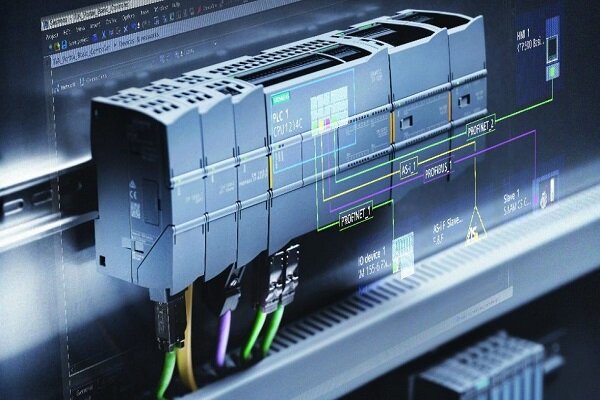
Smart Industrial Automation Solutions with Siemens PLC
Main keyword: plc
SEO title: Smart Industrial Automation Solutions with Siemens PLC
Meta description: Learn how Siemens PLC systems help factories improve productivity, reduce errors, enable smart monitoring, and build scalable industrial automation solutions.
Suggested URL slug: smart-industrial-automation-siemens-plc
Introduction
Modern factories are no longer built only on machines and manual operation. Today, industries need speed, accuracy, safety, lower downtime, and better production data. This is why smart industrial automation has become essential. At the center of many automation systems, there is a powerful device called a plc.
A PLC, or Programmable Logic Controller, acts like the brain of an industrial machine or production line. It receives signals from sensors and switches, processes them according to a programmed logic, and controls outputs such as motors, valves, alarms, conveyors, pumps, and other equipment.
When we talk about reliable industrial automation, Siemens PLC is one of the most recognized solutions in the market. Siemens PLC systems are widely used in manufacturing, packaging, food and beverage, water treatment, machinery, energy, and many other industries.
This article is written for three types of readers: business owners and salespeople who want to understand the value of plc, beginners who are new to automation, and technical users who want a practical overview of Siemens PLC solutions.
What Is a PLC?
A plc is an industrial controller designed to automate machines and processes. It reads input signals, follows a programmed sequence, and sends output commands.
For example, in a packaging line, a sensor may detect a product on a conveyor. The plc receives this signal, stops the conveyor, activates the packaging mechanism, checks the process status, and then restarts the line. All of this happens quickly, repeatedly, and accurately.
Unlike traditional relay-based control systems, a plc is programmable. This means the control logic can be changed, expanded, tested, and optimized without rebuilding the entire electrical panel.
Why Siemens PLC Is Popular in Industrial Automation
Siemens has a long history in industrial automation, and its SIMATIC controller family is used in many automation projects worldwide. One reason Siemens PLC systems are popular is the wide range of available controllers for different project sizes.
For compact machines and basic automation, Siemens offers options such as SIMATIC S7-1200 and the newer S7-1200 G2. For larger, faster, and more complex automation systems, SIMATIC S7-1500 provides higher performance, advanced diagnostics, and better scalability.
Another important advantage is the engineering environment. Siemens PLC systems can be configured, programmed, tested, and diagnosed using tools such as TIA Portal and STEP 7. This gives engineers a more integrated workflow for hardware configuration, programming, commissioning, and maintenance.
What Does Smart Automation Mean?
Traditional automation means that machines follow commands. Smart automation goes further. It allows machines and control systems to collect data, show real-time status, detect faults, support maintenance, and help managers make better decisions.
A smart automation system based on plc can monitor production count, machine status, sensor signals, downtime, motor speed, process temperature, pressure, alarms, and energy usage.
This data is valuable for maintenance teams, production managers, factory owners, and even sales or planning departments. For example, if a machine stops several times a day because of the same sensor, the plc and monitoring system can help identify the issue before it becomes a major production problem.
Benefits of Siemens PLC in Industrial Automation
1. Higher Productivity
When machines are controlled by plc, processes become more consistent. Timing, sequence, and control logic are handled automatically. This helps production lines run with fewer interruptions and better output.
2. Reduced Human Error
Manual operation can lead to mistakes, especially in repetitive or sensitive processes. Siemens PLC systems reduce the dependency on manual decisions and help keep the process stable.
3. Faster Troubleshooting
A major advantage of plc-based control is diagnostics. Engineers and technicians can check input and output status, alarms, program logic, and system errors more quickly. This reduces downtime and improves maintenance efficiency.
4. Scalability
A factory may start with a small automation project and later need more sensors, motors, HMI panels, network communication, data monitoring, or safety functions. Siemens PLC systems provide scalable options for future expansion.
5. Better Safety
Industrial machines need safety features such as emergency stops, access control, safe motion, and operator protection. With the right Siemens PLC and safety components, automation systems can be designed to reduce operational risks.
Common Applications of Siemens PLC
Siemens PLC systems are used in many industries, including:
Food and beverage production
Packaging machines
Water and wastewater treatment
Pharmaceutical production
Cement and steel plants
Conveyor systems
Pump control systems
HVAC and building facilities
Custom industrial machinery
Energy and utility systems
In each of these applications, the plc helps control the process, reduce downtime, improve accuracy, and make the system easier to monitor.
Siemens PLC for Beginners
If you are new to automation, start with the basics. First, understand inputs and outputs. Inputs can be sensors, push buttons, limit switches, temperature signals, or pressure transmitters. Outputs can be motors, relays, contactors, signal lamps, valves, or drives.
Next, learn basic plc logic such as AND, OR, timers, counters, memory bits, and simple interlocks. After that, you can practice with small projects such as motor start/stop control, conveyor control, tank level control, or alarm systems.
You do not need to start with a complex factory project. A small practical project is often the best way to learn PLC programming.
Business Value of PLC for Managers and Sales Teams
For managers, factory owners, and sales teams, a plc is not just a technical device. It is a business tool.
A good automation system can reduce downtime, improve product quality, lower maintenance costs, increase production speed, and provide better visibility into factory performance. These benefits can directly affect profitability and customer satisfaction.
When buying or selling Siemens PLC systems, it is important not to focus only on hardware price. You should also consider long-term support, project requirements, spare parts availability, engineering quality, maintenance skills, and future expansion.
How to Choose the Right Siemens PLC
Before choosing a plc, consider these factors:
Number of digital and analog inputs and outputs
Required processing speed
Machine size and process complexity
Communication needs such as industrial networking
HMI or SCADA connection
Motion control requirements
Safety requirements
Future expansion
Budget and maintenance costs
Technical skill of the engineering team
Choosing the wrong plc may look cheaper at the beginning, but it can create limitations, extra costs, and project delays later.
The Future of Industrial Automation with Siemens PLC
The future of industrial automation is moving toward connected machines, real-time data, predictive maintenance, digital engineering, and smarter production systems. In this future, plc systems will continue to play a central role.
Modern PLC solutions are not only used for simple input and output control. They are becoming part of larger digital ecosystems where machines, software, operators, and management systems work together.
With the right Siemens PLC solution, factories can build a strong foundation for smart manufacturing and long-term automation growth.
Conclusion
Siemens PLC is one of the key technologies behind smart industrial automation. It helps factories control machines, improve productivity, reduce errors, monitor processes, and prepare for future expansion.
Whether you are a business owner, a beginner, a salesperson, or a technical professional, understanding plc technology can help you make better decisions in industrial projects.
Automation is not only about buying equipment. It is about choosing the right system, designing it correctly, programming it carefully, installing it professionally, and maintaining it effectively. In many industrial projects, Siemens PLC can be a reliable foundation for this journey.
Frequently Asked Questions About Siemens PLC
What is a PLC?
A PLC is a Programmable Logic Controller used to control industrial machines and processes.
Where is Siemens PLC used?
Siemens PLC systems are used in manufacturing, packaging, water treatment, machinery, energy, food production, and many other industries.
Is PLC programming difficult?
For beginners, basic PLC programming is not too difficult. You can start with inputs, outputs, timers, counters, and simple control logic.
What is the difference between PLC and traditional relay control?
Traditional relay control depends on fixed wiring, while a plc is programmable and easier to modify or expand.

